Bricklayer Gnome: A Practical Designer’s Review
First Impressions: Charm with Craftsmanship
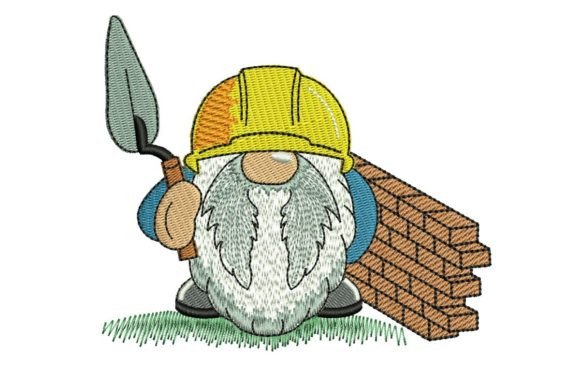
When I opened the Bricklayer Gnome embroidery file, what struck me wasn’t just its whimsy—but its intentionality. This isn’t a cartoonish doodle slapped into stitches. It’s a well-proportioned, balanced machine embroidery design with clear visual hierarchy: a sturdy little gnome in overalls, holding a trowel and standing beside a tidy stack of bricks. The posture reads confident, not cutesy; the details—like the textured brickwork and subtle tool shading—suggest thoughtful digitizing. As a designer who evaluates hundreds of embroidery files yearly, I immediately sensed this one was built for real-world use, not just screen appeal.
A Real Project Test: Custom Embroidered Tote Bags for a Local Bakery
Last month, I used Bricklayer Gnome on a batch of heavyweight cotton canvas totes for a neighborhood artisan bakery launching a “Handmade With Care” spring collection. We paired it with a simple serif font for the shop name below—not part of the design, but placed intentionally to complement the gnome’s grounded stance. On the finished tote, the Bricklayer Gnome held up beautifully: no thread nesting, no distortion at the curved seam near the handle, and the satin-stitched overalls retained crisp definition even after two rounds of gentle washing (a must for food-service-adjacent merch). Customers responded warmly—not just to the theme, but to how *finished* it looked. That matters. When your handmade product carries weight—literally and perceptually—the embroidery can’t look like an afterthought.
Where It Shines (and Where It Needs Thought)
Bricklayer Gnome performs exceptionally well across several high-value use cases:
- Custom apparel: Sweatshirt embroidery? Yes—especially on midweight fleece or French terry. The design’s moderate stitch density avoids stiffness while maintaining clarity.
- Embroidered patch: Its clean outer edge and contained footprint make it ideal for iron-on or sew-on patches on aprons, denim jackets, or kids’ backpacks.
- Baby embroidery: Gentle scale and friendly expression suit onesies and burp cloths—just avoid dense fill areas on ultra-thin interlock knits without proper cutaway stabilizer.
- Holiday embroidery & personalized gifts: It reads “handmade charm” without leaning into seasonal cliché—perfect for Father’s Day, housewarming, or small business branding that values authenticity over trend-chasing.
- Craft business & Etsy seller asset: As a digital embroidery file, it pairs easily with coordinating designs (brick borders, mortar lines, tiny tools) to build cohesive design assets for listings or printable mockups.
Use With Care: Practical Boundaries
This isn’t a one-size-fits-all motif. Here’s where I recommend pausing before stitching:
- Small hoop sizes: While compact, the brick detail and tool shape demand at least a 4" x 4" hoop minimum. Don’t force it into a 3" circle—it’ll sacrifice legibility.
- Textured or napped fabrics: Fleece, corduroy, or thick terry cloth may swallow fine running-stitch lines in the trowel handle or brick grout. Test first—and consider lightening stitch density manually if your software allows.
- Stretchy fabric: Not ideal for performance tees or jersey without significant stabilization. The gnome’s upright structure relies on stable ground beneath the needle.
- Dark fabric backgrounds: The design benefits from high-contrast thread colors—especially in the brick highlights and facial features. Avoid matching thread to dark fabric unless you’re aiming for subtle texture over readability.
- Curved surfaces (caps, hats): The flat, front-facing composition doesn’t adapt well to crown curvature. Save it for front-panel placements only—and confirm your cap frame supports that orientation.
What It Adds to Your Finished Product
Good embroidery does more than decorate—it signals care, consistency, and craft. Bricklayer Gnome elevates a plain tote bag into a story: “This was made by someone who pays attention.” For Etsy sellers, that translates directly to perceived value and repeat engagement. For boutique owners, it strengthens brand voice—warm, skilled, quietly confident. And for clients commissioning custom apparel or nursery decor, it delivers instant recognition and emotional resonance without needing explanation.
Designer Notes You Can’t Skip
Before stitching Bricklayer Gnome into anything you’ll sell or gift:
- Test the embroidery file on scrap fabric matching your final substrate—especially for stitch density and thread tension.
- Review thread colors against both light and dark fabric backgrounds using a printable mockup.
- Confirm hoop size compatibility with your machine and project surface.
- Inspect small details (like the trowel’s tip or individual brick edges) under magnification—if they vanish in test stitching, adjust density or stabilizer.
- Use appropriate stabilizer: medium-weight cutaway for knits, tear-away for stable wovens, and fusible + cutaway for lightweight linens.
- Check licensing terms before selling finished products or bundling the digital embroidery file—commercial use isn’t automatic, even for Work-category designs.
Final Thought: A Design That Earns Its Place
Bricklayer Gnome doesn’t shout. It stands—steadily, thoughtfully, with quiet craftsmanship. It’s the kind of embroidery design that makes customers pause, smile, and ask, “Who made this?” That’s the mark of effective design work: not novelty, but resonance. Whether you’re building a craft business, curating a holiday collection, or adding personality to custom apparel, this is a reliable, expressive, and commercially smart choice—if you respect its boundaries and lean into its strengths. Stitch it with intention, and it’ll carry your brand’s voice long after the hoop comes off.