Red Pink Flowers Border
First Impressions: Soft, Sweet, and Surprisingly Versatile
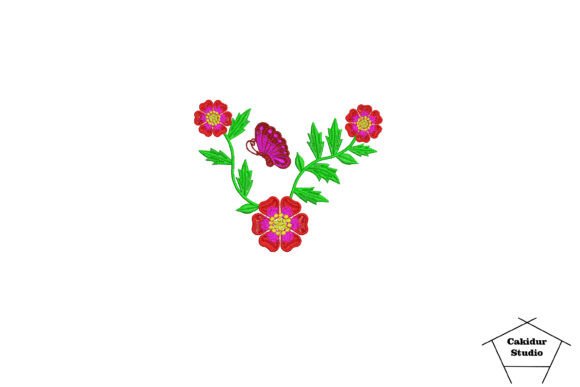
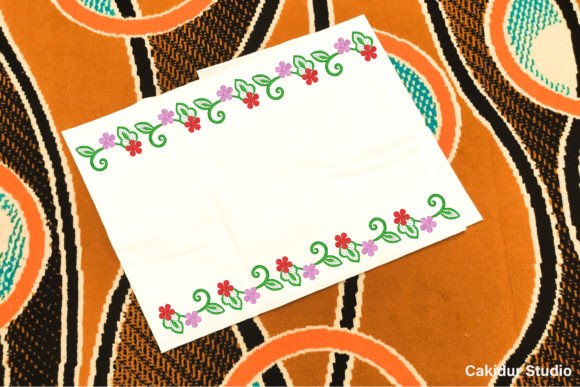
When I opened the Red Pink Flowers Border embroidery file, I wasn’t expecting to pause mid-scroll—but I did. It’s not flashy or oversized; instead, it carries a gentle rhythm—curving vines, clustered blossoms in warm reds and soft pinks, and subtle leafy accents spaced just right. The layout feels intentional, not crowded. There’s breathing room between elements, which tells me this wasn’t rushed through auto-digitizing. As a designer who’s stitched hundreds of borders for client projects, that spacing is everything—it means cleaner hooping, fewer thread breaks, and better wear over time.
A Real Project Test: Embroidering a Linen Tea Towel for a Local Boutique
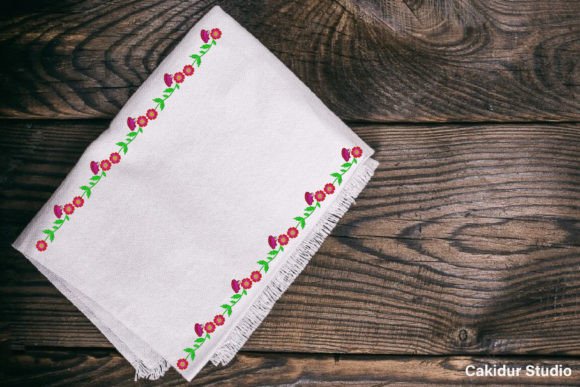
Last week, I used Red Pink Flowers Border on a set of heavyweight linen tea towels for a small-batch kitchen goods shop. We placed it along the lower hem—about 3 inches tall, centered—and paired it with off-white thread on natural linen. The result? Warm, inviting, and quietly refined—not “cute” in a childish way, but handmade with care. Customers noticed it immediately. One even asked if it was hand-embroidered (it wasn’t). That’s the kind of impression this border makes: it elevates without shouting.
Where It Shines—and Where It Needs Thought
Red Pink Flowers Border works beautifully on stable, medium-weight fabrics like cotton twill, quilting cotton, denim, and linen. I’ve used it on custom apparel (sweatshirt hems, tote bag edges), baby items (blanket borders, onesie cuffs), and boutique home goods (pillow covers, apron hems). It reads well at modest sizes—no tiny details get lost in fill stitch, and the satin-stitched petals hold their shape even after gentle machine washing.
That said, proceed carefully on stretchy knits like t-shirt jersey or thin rayon. Without proper stabilizer—preferably cutaway + tear-away combo—the vine curves can distort. On dark fabric, test thread contrast first: light pink thread may fade into charcoal; deep burgundy pops better. And avoid placing it directly over seams or curved surfaces like cap brims unless you’ve confirmed hoop clearance—those outer petals extend just enough to catch on tight curves.
Design Integrity Meets Commercial Practicality
As an Etsy seller and small shop product developer, I look beyond prettiness—I ask: does this support my brand voice? Does it scale across products? Does it feel premium *in hand*? Red Pink Flowers Border checks those boxes. Its balanced stitch density avoids bulkiness on lightweight fabrics yet delivers enough texture to justify a higher price point on handmade goods. When stitched on a baby blanket, it signals thoughtfulness—not just decoration. On a personalized gift, it adds warmth without overwhelming the recipient’s name or monogram nearby.
For commercial embroidery shops, it’s a reliable repeatable asset. No dense underlay traps lint, no overlapping satin stitches cause tension issues, and the consistent line weight makes color changes smooth if you’re offering thread customization. It also translates cleanly into printable mockups—whether you're building an Etsy listing or pitching to a boutique buyer, the border holds up in grayscale previews and light/dark background tests.
Smart Designer Moves Before You Stitch
Before committing to your first Red Pink Flowers Border project, do these five things:
- Test on scrap fabric—same type and weight as your final piece, with the same stabilizer stack.
- Check thread color harmony—try three options: matching pink, contrasting cream, and tonal red. See which best supports your product’s mood.
- Review stitch density—especially near petal tips and vine ends. High density there can cause puckering on delicate weaves.
- Confirm hoop size compatibility—some versions run longer than standard 4x4 hoops. If you’re using it on caps or small accessories, verify dimensions first.
- Inspect small details—zoom in on your embroidery software. Are leaf veins readable? Do flower centers have clean satin coverage? If not, it may need minor digitizing tweaks before production use.
What This Border Says About Your Work—Without Words
In a market flooded with generic floral motifs, Red Pink Flowers Border stands out by feeling *designed*, not assembled. It doesn’t try to be everything—it’s a border, and it does its job with grace. That restraint builds customer trust. When someone buys a towel or baby onesie with this stitched on, they’re not just buying fabric—they’re buying intention. They feel seen. That’s why I reach for it when developing new craft business lines or refreshing holiday embroidery collections.
It’s equally effective for personalization—pair it with a simple script name along the top edge of a tote bag, or mirror it on both sides of a pillow cover for symmetry. And because it’s a clean machine embroidery design with clear visual hierarchy, it integrates smoothly into larger compositions: think Red Pink Flowers Border framing a central applique design, or anchoring the bottom of a custom sweatshirt embroidery layout.
Final Thought: A Border That Earns Its Place
This isn’t just another digital embroidery file you download and forget. Red Pink Flowers Border earns its spot in your design assets because it balances charm with craftsmanship. It performs consistently across fabric types, scales thoughtfully across product categories, and carries emotional weight—whether it’s stitched onto a wedding guest towel or a toddler’s backpack. For designers, sellers, and makers who value both aesthetic cohesion and real-world reliability, it’s not just usable—it’s dependable.