Cat with Fish: A Designer’s Real-World Embroidery Review
First Impressions: Charm That Doesn’t Oversell Itself
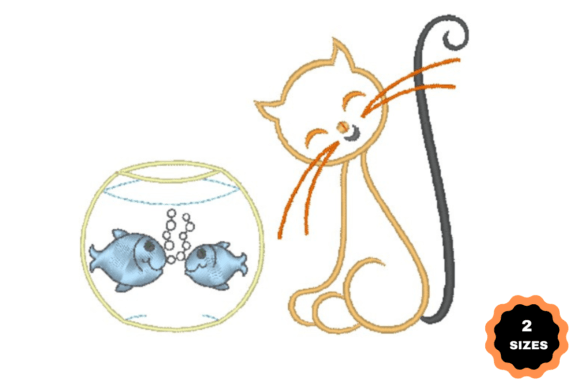
< p >When I opened Cat with Fish for the first time, what struck me wasn’t flashiness—it was balance. The cat sits comfortably centered, tail curling just enough to suggest playfulness without crowding the fish motif. There’s no forced cuteness or overwrought detail; instead, it leans into clean line work and intentional negative space. As a designer who regularly selects embroidery files for client projects and small-batch merchandise, I appreciated how immediately readable it is at 3–4 inches wide—the sweet spot for tote bags, baby onesies, and tea towels. It feels like a design made *for* stitching, not just for screen viewing.A Real Project Test: Custom Embroidered Tote for a Local Bakery
I stitched Cat with Fish onto a natural canvas tote for a neighborhood bakery’s spring collection—intended as a limited-run gift with custom coffee blends. The fabric was medium-weight, tightly woven, and lightly textured. Using medium-cutaway stabilizer and standard 40-weight rayon thread, the design stitched out cleanly in under 8 minutes. The satin stitch around the cat’s outline held crisp definition, while the fill stitches in the fish’s body avoided pilling or shadowing. Customers responded instantly—not just to the whimsy, but to how *finished* it looked. No floating threads, no distortion, no “digital flatness.” That matters when your handmade product competes with mass-printed alternatives on a shelf or Etsy listing.
Where Cat with Fish Shines (and Where It Needs Thought)
- Custom apparel: Works beautifully on sweatshirt cuffs, pocket corners, and sleeve accents—especially when scaled to 2.5–3.5". Avoid placing it directly over thick seams or ribbed cuffs unless you’ve tested stabilizer layers.
- Baby embroidery: Its soft curves and lack of fine interior linework make it safer than fussy cat designs for onesies and burp cloths—but always test on scrap knit fabric first. Stretchy surfaces demand proper tear-away + cutaway combo stabilizing.
- Embroidered patch: With minor digitizing tweaks (tightening jump stitches, simplifying inner contours), Cat with Fish converts smoothly into a sew-on or iron-on patch. Just confirm the file includes clean outer borders before exporting.
- Holiday embroidery & personalized gifts: Paired with simple monogram initials or a seasonal phrase (“Meow & Merry”), it adds warmth without clutter—ideal for kitchen towels, pillow covers, or nursery wall hangings.
- Commercial embroidery & craft business use: It reads well in printable mockups and digital previews, helping Etsy sellers and boutique owners convey quality before purchase. But remember: verify licensing terms before bundling Cat with Fish into digital embroidery bundles or subscription offerings.
Fabric & Stitching Considerations You Can’t Skip
Not every fabric welcomes Cat with Fish equally. On dark denim or heavy twill, the design holds up well—but only if thread colors offer strong contrast (e.g., cream cat + navy fish on charcoal fabric). On thin cotton poplin or lightweight linen, reduce stitch density slightly or add lightweight fusible stabilizer behind the hoop to prevent puckering. And never skip the test stitch on textured fabrics like terry cloth or bouclé—those loops can trap fill stitches and mute definition in the fish’s eye or whisker details.
Curved surfaces—like caps or beanies—require careful placement. Cat with Fish has gentle curves itself, so centering it on a front panel works, but avoid stretching it across the crown. Also, check whether the file includes multiple sizes. If not, resizing beyond ±15% risks distorted satin stitches or unstable fill areas—especially around the fish’s tail fin.
Design Assets That Build Trust—Not Just Cuteness
What makes Cat with Fish more than just another cats embroidery file? It supports brand consistency. Whether you’re an apparel decorator building a pet-themed line or an Etsy seller curating cozy home goods, this design reinforces a tone: approachable, handcrafted, quietly confident. It doesn’t shout. It invites touch—and that translates directly to buyer engagement. Customers photograph it. They tag friends. They ask, “Where’d you get that?” That kind of organic recognition is gold for small shop products.
It also scales well across mediums. I used the same Cat with Fish file in a digital embroidery preview (PNG overlay on a mockup), a physical embroidered apron sample, and a printed catalog insert—each time, the visual language stayed cohesive. That reliability is rare in generic machine embroidery design libraries.
Practical Designer Notes Before You Stitch
- Test Cat with Fish on scrap fabric *matching your final project*—not just muslin.
- Check thread color contrast on both light and dark backgrounds using a black-and-white mockup view.
- Review stitch density: dense fills may overwhelm delicate fabrics; sparse running stitch outlines may vanish on busy prints.
- Confirm hoop size compatibility—especially if working with smaller hoops (4x4") or specialty frames.
- Inspect small details: whiskers, fish scales, and inner ear lines should be legible post-stitch, not lost in fill texture.
- Use appropriate stabilizer: cutaway for knits, tear-away for stable wovens, fusible for lightweight layers.
- Verify commercial use rights—particularly if selling finished items or reselling the embroidery file as part of a craft business kit.
Final Thought: A Design That Earns Its Place
Cat with Fish isn’t trying to be everything. It’s a focused, well-considered machine embroidery design built for real-world making—not just pixel-perfect previews. It performs across tote bag design, sweatshirt embroidery, baby embroidery, holiday embroidery, and commercial embroidery projects because it respects fabric, thread, and human attention spans. For Etsy sellers, craft fair vendors, and creative entrepreneurs, that kind of reliability isn’t optional—it’s how you turn one embroidered item into a repeat customer, a tagged photo, and a story worth sharing.