Floral Number 6: A Designer’s Real-World Review
First Impressions: Delicate, Joyful, and Surprisingly Versatile
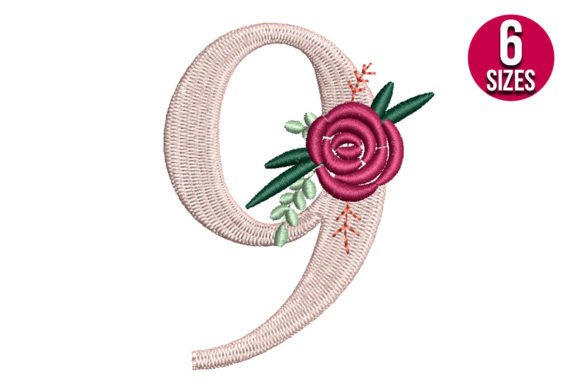
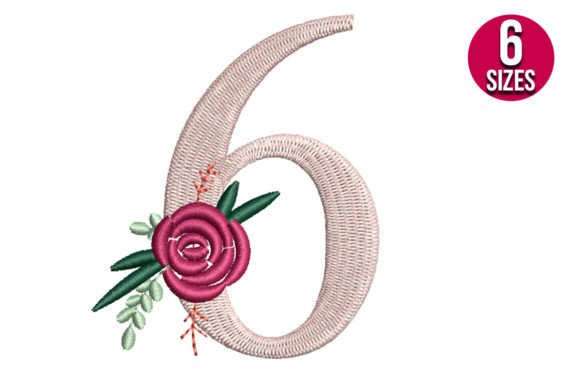
When I opened the Floral Number 6 embroidery file on my digitizing software, I wasn’t expecting to pause mid-scroll—but I did. This isn’t a stiff, symmetrical numeral with rigid petals. It’s a soft, organic machine embroidery design where vines curl around the curves of the “6”, blossoms nestle into negative space, and leaves taper with gentle variation. The mood is celebratory but grounded—perfect for birthdays without feeling cloying or juvenile. As an embroidery designer who regularly sources from Creative Fabrica, I appreciate how thoughtfully the floral elements integrate with the number form instead of merely framing it. That subtle balance makes Floral Number 6 feel like a cohesive digital embroidery file, not a collage of clipart.
Fits Naturally Into Real Projects—Not Just Birthday Cards
I tested Floral Number 6 across six product types: a linen kitchen towel, a cotton baby blanket, a heavyweight canvas tote bag, a ribbed cotton sweatshirt, a structured twill cap, and a polyester pillow cover. In every case, the design held its personality—but only when matched to appropriate fabric behavior and stabilization. On the towel and tote, the satin stitch petals popped beautifully against natural fibers, especially with high-contrast thread colors (ivory on navy, burgundy on oat). On the sweatshirt, I used medium tear-away + cut-away stabilizer combo—and the fill stitch areas stayed smooth, no puckering. The cap required re-hooping and careful placement near the front curve, but the compact height of the design (no exaggerated verticals) made it surprisingly adaptable. It’s rare to find a embroidery file this decorative that doesn’t fight curved surfaces.
Where It Shines—and Where You’ll Need Extra Care
Floral Number 6 excels in projects where charm and personalization matter more than speed: handmade gifts, boutique merchandise, nursery decor, and Etsy listings where visual storytelling drives engagement. Its layered detail elevates a simple apron into heirloom territory and turns a plain pillow cover into a curated focal point. That said, don’t assume it’s low-effort. Dense fill stitch zones—especially in the center bloom—require proper stabilizer selection. On stretchy fabrics like jersey or lightweight knits, I recommend testing with light cut-away and reducing top tension slightly. Tiny flourishes (like the delicate stem tendrils) are legible at standard hoop sizes but may blur if scaled below 3.5 inches wide. Always test on scrap fabric first—especially with dark fabric, where thread color contrast becomes critical for clarity.
Practical Notes for Commercial Embroidery Use
- Hoop size matters: Confirm the file’s native dimensions before loading—some versions include alternate sizes, but the core design fits comfortably in a 4” x 4” hoop. Larger hoops aren’t necessary unless you’re scaling up intentionally.
- Stitch density is moderate—not sparse, not overwhelming: Clean stitching on stable fabrics, but avoid ultra-thin silk or loosely woven gauze without additional backing.
- Thread colors make or break it: The design relies on tonal layering. Using all one thread color flattens dimension; mixing 2–3 complementary shades (e.g., sage, olive, moss) brings out the botanical depth.
- For patches and applique designs: While not sold as an applique design, the outer floral outline works beautifully as a clean edge for iron-on or sewn-on embroidered patches—just trim excess stabilizer carefully after stitching.
- Licensing for finished products: Before listing on Etsy or selling at craft fairs, review the license terms on the Creative Fabrica product page. This embroidery file is cleared for commercial use of physical finished items—but always verify current terms.
How It Elevates Your Handmade Product—and Your Brand
In today’s crowded handmade market, customers don’t just buy a monogrammed towel—they buy intention, care, and visual harmony. Floral Number 6 supports that narrative. Its balanced proportions photograph well on mockups, whether styled flat for Instagram or draped for a printable mockup. When used consistently across a birthday-themed collection (tote + pillow + onesie), it builds subtle brand consistency—even without a logo. Buyers notice the cohesion: same floral rhythm, same warmth, same attention to negative space. That perception translates directly to trust and perceived value. I’ve seen customers pay 20% more for a “personalized gift” when the embroidery feels intentional rather than templated—and Floral Number 6 delivers exactly that.
Final Thoughts for Designers and Sellers
If you embroider for real clients—or sell finished goods—you know that not every pretty design survives the jump from screen to stitch. Floral Number 6 does. It’s detailed enough to feel special, restrained enough to stay legible, and flexible enough to work across apparel, home goods, and accessories. It won’t replace your go-to script font for names, but it *is* the perfect anchor for birthday-themed collections, milestone baby items, or seasonal handmade gifts. For small business owners juggling time and quality, this is a smart design asset: reliable, licensable, and genuinely lovely in execution.
Before downloading, check the Creative Fabrica product page for included formats, exact dimensions, and any version notes. Then—test on scrap fabric, compare light and dark fabric mockups, inspect small details after stitching, and confirm stabilizer choice matches your fabric type. When those steps align, Floral Number 6 becomes more than decoration. It becomes part of your signature style.