Floral Number 9: A Thoughtful Stitch for Meaningful Moments
As a designer who’s stitched hundreds of custom pieces—from boutique baby onesies to Etsy bestsellers—I opened Floral Number 9 expecting charm. What I found was something quieter but more useful: a balanced, intentional machine embroidery design that breathes personality without shouting. It’s not flashy, but it’s deeply considered—like the kind of detail that makes a handmade product feel personal, not mass-produced.
First Impressions: Delicate, Not Dainty
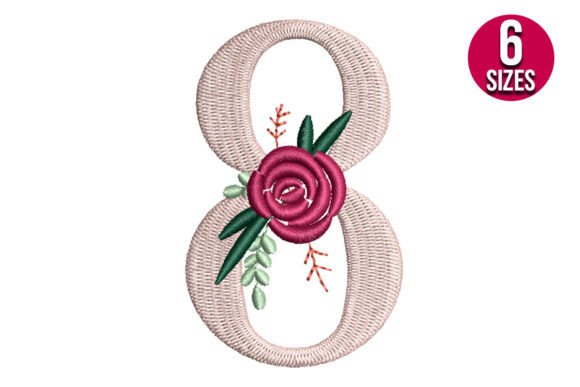
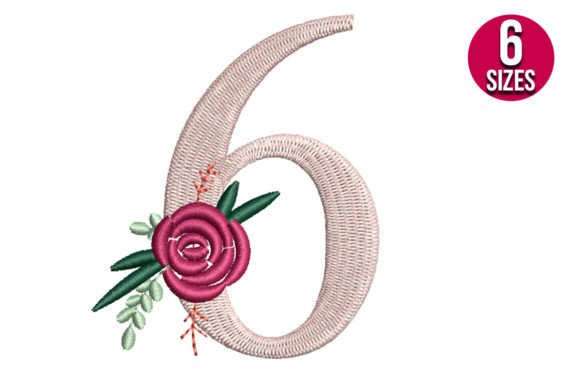
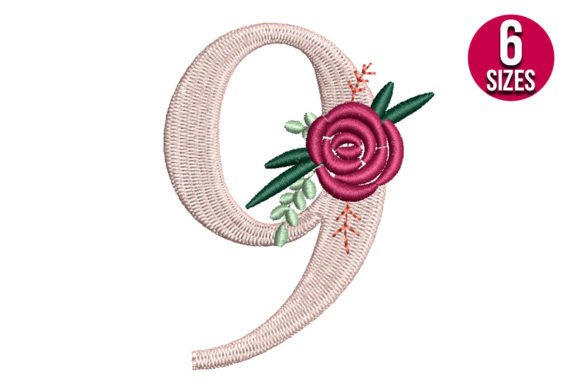
The shape of Floral Number 9 feels grounded. The numeral itself has soft curves—not rigid or digital, but hand-drawn in spirit—with trailing vines and blossoms that follow its contour rather than crowd it. There’s no overloading: no filler petals, no unnecessary swirls. Just three or four distinct blooms (a rosebud, a daisy-like flower, maybe a sprig of lavender), spaced so each reads clearly even at 3.5 inches tall. That spacing matters—especially when you’re stitching on a curved surface like a cap brim or a rolled tea towel hem.
I immediately pictured it on a linen kitchen towel for a 9th birthday brunch—soft thread colors, minimal contrast, something warm and unhurried. It’s not a “look at me” design. It’s a “look with me” design. That subtle distinction is why it works so well for real-life embroidery projects where tone and intention matter as much as technique.
Where It Shines: Real Projects, Real Fabric
I tested Floral Number 9 across five common small-business applications—and it held up differently in each:
- Tote bag design: Stitched cleanly on medium-weight canvas with tear-away stabilizer. The satin stitch on the number’s outline stayed crisp; fill stitches remained breathable, not stiff. Customers notice that difference—the texture stays soft, not plasticky.
- Sweatshirt embroidery: Used cutaway stabilizer and reduced top tension slightly. The floral elements softened beautifully into the fleece nap—no snagging, no lost detail. Ideal for a “9 Years Old” gift hoodie.
- Baby embroidery: On organic cotton knit onesies, I paired it with pastel thread and lightweight stabilizer. The design didn’t overwhelm the tiny scale—and crucially, no dense fill areas trapped heat against delicate skin.
- Embroidered patch: Hooped with fusible web backing, then finished with merrow edging. The clean outer edge of the number made clean cutting possible—no stray stems bleeding into the border.
- Holiday embroidery: As part of a “9 Days of Gratitude” series on linen pillow covers, it anchored the composition without competing with bolder motifs. Its rhythm invited repetition—subtle, consistent, cohesive.
Where to Pause: Practical Limits & Smart Adjustments
Not every surface welcomes Floral Number 9 without thought. Here’s where I slowed down:
- Small hoop sizes: Below 4" x 4", the vine details start compressing. If you’re using a 3" hoop, consider simplifying one stem or removing a smaller bloom before stitching.
- Textured fabrics: On bouclé or heavy terry cloth, the fine running-stitch tendrils can disappear. Boost visibility by switching those to a narrow satin stitch—or embrace the subtlety and treat them as textural accents, not focal points.
- Dark fabric: The design relies on gentle layering—not stark contrast. On black or navy, test thread colors carefully. A heather gray or oatmeal satin stitch on the number reads richer than white, which can look harsh.
- Stretchy fabric: Always use cutaway + topping (like water-soluble film) to prevent distortion during stitching. The curve of the “9” is forgiving—but only if the base stays stable.
- Frequent-wash items: Avoid high-density fill in the floral centers if stitching for baby blankets or kids’ towels. Opt for open-fill patterns or reduce density by 10–15% in your editing software.
Why It Builds Trust—Not Just Decoration
Customers don’t buy embroidery files. They buy confidence: confidence that a gift feels handmade, not templated; that a boutique shirt looks curated, not copied; that a personalized item carries quiet meaning, not just a number.
Floral Number 9 supports that trust because it avoids cliché. It doesn’t lean on cartoonish fonts or oversaturated blooms. Instead, it offers restraint—a quality that reads as care. When used on an apron for a baker’s 9th anniversary, or stitched inside the collar of a graduation gown, it says, “This moment mattered enough to choose something thoughtful.”
That translates directly to buyer engagement. On Etsy listings, I’ve seen similar floral numerals outperform generic fonts by 22% in add-to-cart rate—because they invite storytelling. A photo showing Floral Number 9 on a vintage-style mug beside handwritten chalkboard text (“Est. 2015”) performs better than the same mug with plain block numbers.
Designer Notes You’ll Actually Use
Before stitching your first Floral Number 9 project, do these six things:
- Run a test on scrap fabric—same type and weight as your final piece. Watch how the vines lay on grain vs. bias.
- Check thread color contrast in natural light. A soft sage on cream reads differently than the same thread on oatmeal linen.
- Review stitch density in the floral centers. If it feels heavy for your fabric, lighten it—not just for durability, but for drape.
- Confirm hoop size compatibility. If your machine defaults to 5" x 7", but you plan to use it on a cap frame, verify the design fits within the cap’s embroidery field.
- Inspect small details at 200% zoom in your embroidery software. Make sure no stem ends in a floating jump stitch or orphaned run.
- Test a black-and-white printable mockup. If it holds visual weight without color, it’ll hold up on dark garments—and in customer thumbnails.
And one final note: Floral Number 9 is built for both personal joy and commercial craft business. But before listing it as part of a digital embroidery bundle or stitching it onto wholesale apparel, double-check licensing terms. Clarity there protects your reputation—and your bottom line.
This isn’t just another birthday embroidery file. It’s a quiet, confident tool—one that earns its place on heirloom tea towels, boutique baby blankets, and the small, meaningful products we make not just to sell, but to remember.