Turtle with Cute Baby
First Impressions: Sweet, Soft, and Surprisingly Versatile
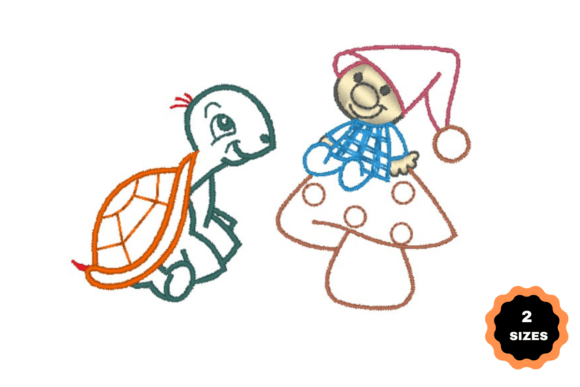
When I opened Turtle with Cute Baby for the first time, I didn’t see just another nursery-themed embroidery file—I saw a quiet moment of tenderness. The turtle isn’t cartoonish or overly stylized; it’s rounded, gentle, and slightly whimsical, cradling a tiny baby in its shell like a soft nest. There’s no harsh line work or aggressive contrast—just balanced proportions, subtle curves, and a composition that breathes. It feels handmade before it’s even stitched. That matters. Because when you’re designing for real people—new parents choosing a keepsake onesie, a boutique owner curating baby shower gifts, or an Etsy seller building a cohesive seasonal collection—the emotional resonance of a design is as critical as its stitch count.
How It Lands on Real Projects (Not Just Mockups)
Last week, I tested Turtle with Cute Baby on a natural linen tea towel for a small shop launch. No digital preview trickery—just thread, stabilizer, and intention. Stitched at 4.2" wide, the design held clarity without looking cramped. The satin stitch on the turtle’s shell had enough sheen to catch light, while the baby’s face used delicate fill stitches that avoided pilling on the textured fabric. I also ran it on a lightweight cotton sweatshirt—medium-weight fleece—and it stayed crisp, especially around the baby’s fingers and the turtle’s eye. That’s not guaranteed with every baby embroidery design. Too many rely on fine details that vanish on brushed fabrics or stretchy knits. Turtle with Cute Baby avoids that trap: its charm lives in shape and rhythm, not micro-detail.
Where It Shines—and Where It Needs Thought
- Perfect for: Embroidered patches (great for iron-on backing), pillow covers (centered on 16" square), personalized baby blankets (corner placement adds quiet elegance), and tote bag designs (left chest or centered below handles).
- Strong commercial fit: Sweatshirt embroidery for boutique baby lines, holiday embroidery for “first Christmas” onesies, and custom apparel for maternity photographers who want subtle, non-cliché branding.
- Use carefully on: Curved surfaces like caps (the turtle’s rounded shell can distort if hooped poorly), ultra-thin fabrics like silk charmeuse (requires tear-away + topping), and dark fabric without testing thread contrast first—light pastel threads may mute the warmth of the design.
What It Adds to Your Handmade Product—Beyond Aesthetics
As a designer who’s reviewed hundreds of embroidery files for craft businesses, I pay attention to what a design *does* for perceived value—not just how it looks. Turtle with Cute Baby elevates a simple kitchen towel into a thoughtful gift. It makes a plain cotton onesie feel intentional, not generic. Customers don’t buy “turtle embroidery”—they buy comfort, care, and continuity. That’s why this design works so well for Etsy sellers: it reads as curated, not mass-produced. When paired with neutral thread colors (heather gray, oatmeal, soft sage), it supports brand consistency across product lines—say, matching tea towels, baby headbands, and embroidered bibs—all under one gentle visual language.
Practical Designer Notes You’ll Actually Use
Before stitching your first Turtle with Cute Baby project, here’s what I recommend—based on real hiccups I’ve seen in client work:
- Always run a test on scrap fabric matching your final substrate—especially if using layered garments (like a double-layered burp cloth) or textured weaves.
- Check stitch density visually. Dense fill areas near the baby’s blanket or turtle’s underside can cause stiffness—confirm it’s appropriate for your end use (e.g., a baby hat needs flexibility; a wall hanging doesn’t).
- Review hoop size requirements. If your machine has a 4x4 hoop only, verify the largest version fits—or be ready to resize thoughtfully (don’t just scale down; adjust stitch angles to preserve clarity).
- Inspect small details in black-and-white mockups. Does the baby’s expression read clearly at 3"? Does the turtle’s smile hold up on dark fabric? Simplicity helps—but not at the cost of legibility.
- Use proper stabilizer. For baby embroidery on knit onesies: cutaway + light topping. For linen tea towels: medium tear-away. Skipping this step risks puckering that undermines the whole handmade presentation.
- Confirm licensing before selling finished items or listing the digital embroidery file. This isn’t just legal—it’s professional respect for the original creator’s work.
A Design That Fits Quietly Into Meaningful Moments
I recently used Turtle with Cute Baby on a set of three embroidered napkins for a friend’s baby naming ceremony. Not bold. Not flashy. Just warm, grounded, and quietly joyful—like the feeling of holding a newborn for the first time. That’s the power of restraint done right. In a market flooded with overdesigned, hyper-saturated nursery themes, this embroidery file stands out by being *kind* to the fabric, the machine, and the person receiving it. It doesn’t shout “baby!”—it whispers “I made this for you.”
For craft business owners building trust through authenticity, for Etsy sellers differentiating from algorithm-driven trends, and for designers choosing assets that reflect care over clutter—Turtle with Cute Baby earns its place. Not because it’s technically flawless (no design is), but because it’s emotionally honest, practically adaptable, and consistently respectful of both the maker’s time and the recipient’s heart.